

Ask for the section 184 certificate before you exchange, not after. Section 184 of the Strata Schemes Management Act 2015 gives the owners corporation 14 days from the written request to provide it. NSW cooling-off is 5 business days, ending at 5pm on the fifth business day.
Here is our estimate of the gap. Five business days usually span seven calendar days once a weekend falls inside them, and more if a public holiday does. A certificate can therefore take about twice as long to arrive as cooling-off lasts. At auction the gap is wider again, because there is no cooling-off if you buy at auction, or exchange on auction day after the property is passed in.
When the certificate arrives, read it in order and flag the three lines added this year. Then put it next to your strata report and building inspection. Each of the three documents covers ground the other two don't.
How long does a section 184 certificate take, compared with cooling-off?
Section 184 certificate: given within 14 days of the written request
Example: exchange on a Monday, no public holidays
Cooling-off: 5 business days, ends 5pm on the fifth business day
Withdrawing forfeits 0.25% of the purchase price (checked November 2026). No cooling-off if you buy at auction, or exchange on auction day after the property is passed in.
Most consultants need 2 to 3 days' notice for an inspection.
The certificate is due within 14 days of the written request. That is the outer limit, and it may well arrive sooner. Still, plan around the limit.
Cooling-off gives you less room than it seems. If you withdraw during it, you forfeit 0.25% of the purchase price (checked November 2026). Inspections also take lead time: most consultants need 2 to 3 days' notice.
Put those together and the safest order is paperwork first, then exchange.
What a section 184 certificate is, and who can ask for one
NSW Fair Trading describes the strata information certificate as a document that gives information about a lot and the scheme, including financial details. It is typically requested by a potential buyer as part of a sale.
It comes from the owners corporation itself. A member of the strata committee or the strata managing agent must give the certificate under the owners corporation seal, and a fee is payable. Check the current fee with the strata manager before you order.
The request must be in writing with the prescribed fee. It can come from the owner, a mortgagee, a covenant chargee or a person authorised by them. A buyer comes in as a person authorised by the owner, so ask your conveyancer or the selling agent how the request is being made.
Fair Trading has a downloadable standard-form certificate, which helps you see the layout before yours arrives.
Reading the certificate line by line
Fair Trading's approved form puts two yes-or-no questions first: whether a strata renewal committee exists, and whether the scheme has an embedded network. The money follows, then orders, meetings, the people, recent by-laws and insurance.
- 1Whether a strata renewal committee has been set upCheck against: Ask your conveyancer or agent
- 2Exclusive supply (embedded) networkAdded from 1 April 2026Check against: Ask your conveyancer or agent
- 3Levies payable and any outstanding levies for the lotCheck against: Strata report: finances, building defects and planned works
- 4Proposals for funding the 10-year capital works planCheck against: Strata report: finances, building defects and planned worksBuilding inspection (unit) and special-purpose report (common property)
- 5Orders and certain compliance action against the owners corporationAdded from 1 April 2026Check against: Strata report: building defects, legal matters
- 6Meetings held in the past year and any upcomingAdded from 1 April 2026Check against: Strata report: meeting notes
- 7Committee members, managing agent, building manager (if any)
- 8By-laws made in the 6 months before the certificate, not lodged at NSW Land Registry ServicesCheck against: Read the by-laws
- 9Insurance policies: insurer, sum insured, due dateCheck against: Strata report: insurance, and when it was last checked
Whether a strata renewal committee exists
One line tells you whether a strata renewal committee has been set up to sell or redevelop the scheme. If it says yes, raise it with your conveyancer before you go any further.
Levies and arrears for the lot
This section is where the money is. The certificate must show regular contributions with payment periods and discounts, and any unpaid contributions with amounts and levy dates. It also covers unpaid amounts under common property rights by-laws and by-laws made under section 108, plus section 81(4) contributions and interest. Watch for a levy for the costs of legal proceedings under section 90. It is listed separately, and it tells you the owners corporation is in, or expects, a legal dispute. If the scheme sits inside a community scheme, community-association contributions appear here too.
Many buyers assume an unpaid levy comes with the lot. In fact, if a levy was outstanding before the certificate was given and isn't shown on it, the purchaser is not responsible for paying it.
Low levies are not automatically good news. Fair Trading warns that low levies could mean steep rises later, and suggests weighing the scheme's age and condition when you assess whether current levies are reasonable.
Funding for the 10-year capital works plan
The certificate sets out proposals for funding the matters in the 10-year capital works plan. Read this line against the building. Fair Trading notes that special levies may be needed if the capital works fund is short.
The plan's format can vary. An owners corporation must use a standard form when it revises or replaces its plan. A scheme with an existing plan that isn't being revised doesn't have to switch, so two certificates can present this differently.
Committee, managing agent and building manager
You'll see the names and addresses of committee members, the managing agent and the building manager (if any), as at the date of the certificate.
Ask the strata manager where the records are kept: that is where a strata search is done. If you'd rather inspect the records yourself, Fair Trading says you need the seller's permission (via the agent) and a fee paid to the owners corporation.
By-laws made in the 6 months before the certificate and not yet lodged
The certificate lists by-laws made in the 6 months before the certificate that aren't lodged at NSW Land Registry Services. These are the rules most likely to be missing from older copies. Fair Trading's buyer advice is to read the by-laws, and these recent ones belong in that reading.
Insurance policies
The certificate lists every insurance policy that has the owners corporation as the insured or a beneficiary: the type of policy, the insurer, the sum insured, the due date and the last premium paid. Check the due date against your settlement date. The strata report then tells you whether the cover is good and when it was last checked.
The three lines added in 2026: embedded networks, compliance action, meetings
| Line on the certificate | What it means | What to do next |
|---|---|---|
| Exclusive supply (embedded) network | A privately owned network supplying multiple lots on a site with electricity, gas, hot and cold water, internet or other utilities | Ask your conveyancer or agent about the contract terms. |
| Orders and certain compliance action against the owners corporation, including under Fair Trading's power to enforce repair and maintenance of common property | A flag, not a verdict | Ask what it relates to and where it stands, and compare it with the strata report's building defects and legal matters. |
| Meetings held in the past year and any upcoming | How often and when owners meet | Check them against the strata report's meeting notes. |
From 1 April 2026, certificates must also carry information about utilities supplied by an exclusive supply (embedded) network, orders and certain compliance action against the owners corporation, and meetings. Treat each one as a prompt for a question rather than an answer. The embedded network question sits near the top of the form, as item 2; the orders and meetings lines sit after the money.
Embedded networks: who supplies your power, gas, water or internet
An exclusive supply network is a privately owned network supplying multiple lots on a site with electricity, gas, hot and cold water, internet or other utilities. The certificate states whether the scheme has one, and the type of service.
The line tells you a network exists. It doesn't tell you the deal. Ask your conveyancer or the agent about the contract terms: who supplies the service, for how long, and what happens when the arrangement ends.
This area is still moving. Reforms planned for 2027 include banning embedded network providers from charging owners corporations for infrastructure when an exclusive supply agreement ends.
Orders and compliance action against the owners corporation
What the compliance line can list
- Undertaking accepted by Fair Trading
- Compliance notice
- Building product rectification order
- Other outstanding orders (including under the Residential Apartment Buildings Act)
Fair Trading's repair powers behind these started 27 October 2025.
The certificate must carry information about orders and certain compliance action against the owners corporation, including under Fair Trading's power to enforce repair and maintenance of common property.
On Fair Trading's approved form this line covers undertakings the owners corporation has given Fair Trading, compliance notices, and outstanding orders. Those orders include building product rectification orders, orders under the Residential Apartment Buildings (Compliance and Enforcement Powers) Act 2020 and development control orders. For a buyer, those are building defects on the record. Fair Trading's repair powers behind the undertakings and notices started 27 October 2025, and an order from the Tribunal can go as far as compulsorily appointing a strata managing agent.
Expect this line to matter more, not less. Fair Trading's 2026-27 enforcement priorities include repairs and maintenance in strata and community schemes. A further tranche of strata changes brought new and increased penalties for non-compliance from 23 October 2026.
A listed order or notice is a flag, not a verdict. Ask what it relates to and where it stands. An empty section doesn't tell you the common property is sound, either.
Meetings held in the past year and coming up
The certificate now shows details of meetings held in the past year and any upcoming meetings. Check them against the strata report's meeting notes showing evidence of disputes. If an upcoming meeting is listed, ask what is on the agenda.
Fair Trading's own strata search, which covers 85,000 NSW schemes, shows the date of the last AGM and when annual reporting was last completed.
Duplexes need a different reading. Since 1 October 2026, two-lot schemes (such as duplexes) don't have to complete strata annual reporting, and lighter rules for their meetings and strata committee are planned for 2027. For a duplex, read the meetings line with that in mind.
What the certificate can't tell you about the building
| Document | What it is | What it covers | What it leaves out |
|---|---|---|---|
| Section 184 certificate | A disclosure from the owners corporation, given under its seal | Levies and arrears, capital works funding, people, by-laws made in the 6 months before it and not lodged, renewal committee, embedded network, compliance action, meetings, insurance policies (insurer, sum insured, due date) | The physical condition of the building |
| Strata search report | A search drawing on the strata roll | Finances, insurance and when it was last checked, building defects and planned works, safety requirements, legal matters, meeting notes | A physical check |
| Building inspection | A physical inspection of the property's condition | In strata, normally the interior and immediate exterior of the unit | Generally excludes other common property areas (special-purpose report needed), termite detection and cost estimates |
| Pest inspection | Requested separately | Termite activity | Building condition |
| Special-purpose property report | Requested separately | Common property areas |
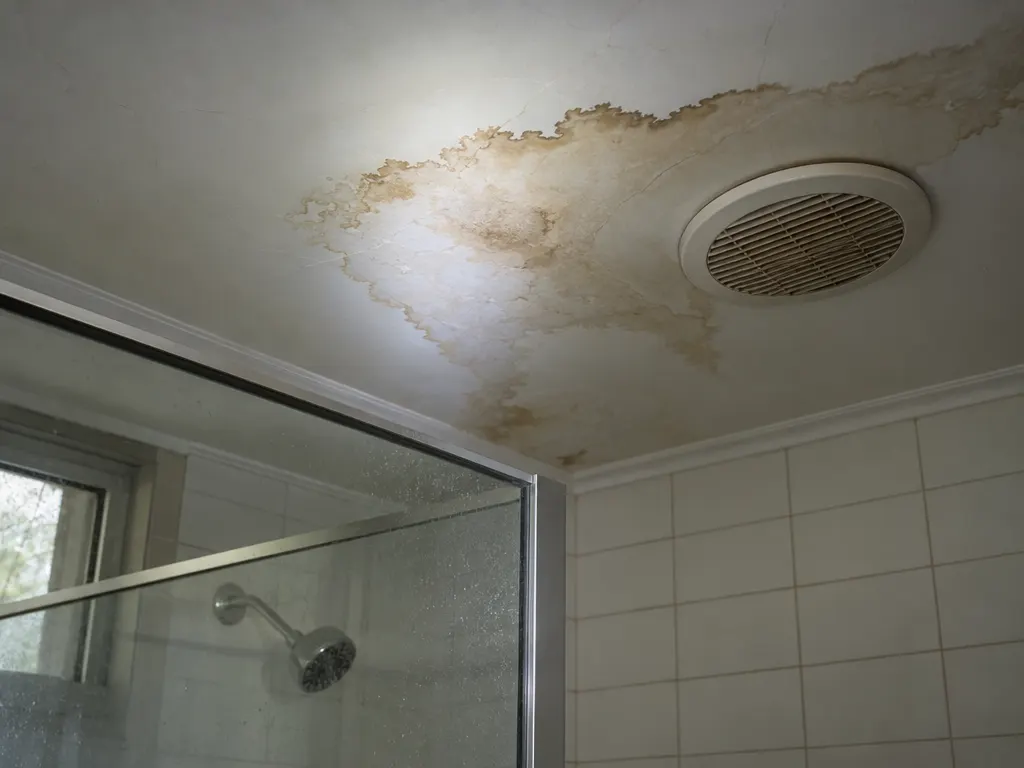
The certificate is paperwork. It tells you what the owners corporation discloses. It cannot tell you what water is doing behind the bathroom tiles.
At Blacktown Building Inspections we put it this way. The certificate tells you what the owners corporation says. The strata report tells you what its records show. The building inspection tells you what the unit looks like on the day. Fair Trading's advice is to get both a strata report and a building inspection report before buying. Our earlier piece on strata reports vs building inspections walks through how those two differ.
Know the limits of the inspection too. In strata, the inspector will normally assess only the interior and immediate exterior of the unit. Other common property areas need a "special-purpose" property report, requested separately.
A building inspection report also generally excludes termite detection and cost estimates. Termite activity needs a separate pest inspection, and our piece on spring termite flights explains why that matters around here.
The report identifies major problems visible at the time, and it should list any area it could not inspect, and why. If the building is new, our guide to strata handover paperwork covers the developer's side.
A buyer's order of play around cooling-off
- Request the certificate early. It is due within 14 days of the written request, so get the request in before you are close to exchanging.
- Order the strata search report. It draws on the strata roll and fills in what the certificate summarises.
- Book the building and pest inspection. Most consultants need 2 to 3 days' notice. Ask for a special-purpose report if you want common property looked at beyond the unit's interior and immediate exterior.
- Read the by-laws, including any made in the 6 months before the certificate and not yet lodged.
- Give everything to your solicitor or conveyancer. Do this before exchange, while cooling-off is still ahead of you. Cooling-off is 5 business days, ending 5pm on the fifth business day. Withdrawing forfeits 0.25% of the purchase price (checked November 2026). There is no cooling-off if you buy at auction, or exchange on auction day after the property is passed in.
Standard-form certificate additions
Embedded network, compliance action, meetings: commenced 1 April 2026
Unlodged by-laws listed
Made within 6 months before the certificate date
Cooling-off
5 business days; 0.25% of price forfeited on withdrawal (checked November 2026); none if you buy at auction, or exchange on auction day after the property is passed in
Booking the building and pest inspection for your unit
Blacktown Building Inspections does pre-purchase building and pest inspections across Blacktown and Western Sydney. If you are buying a unit or townhouse, send us an enquiry through the form below this article. Include the address and your exchange or auction date, and allow for the 2 to 3 days' notice most consultants need. Then put the certificate, the strata report and the inspection report in front of your conveyancer together.
Sources
- https://www.nsw.gov.au/housing-and-construction/strata/guide-to-strata-law-changes-for-strata-committees-and-owners
- https://www.nsw.gov.au/housing-and-construction/strata/buying-a-strata-property
- https://www.nsw.gov.au/housing-and-construction/strata/factsheets-forms-resources/section-184-certificate-strata-schemes
- https://scansw.com.au/news/section-184-certificates-six-things-you-need-to-know
- https://www.nsw.gov.au/housing-and-construction/buying-and-selling-property/buying-property-nsw/inspecting-a-property/inspection-reports
- https://www.nsw.gov.au/departments-and-agencies/fair-trading/news/changes-to-strata-laws
- https://www.nsw.gov.au/departments-and-agencies/customer-service/media-releases/nsw-fair-trading-publishes-its-compliance-and-enforcement-priorities