
Buying a unit or townhouse? NSW Fair Trading says that before you buy a strata property you should read the by-laws and get a strata report and a building inspection report done. These are not two versions of the same check. The strata report asks how the scheme is run and funded. The building inspection asks what condition your lot is in.
Line the two up against the worries buyers raise and the overlap is thin. On our reading of the NSW Government's pages, only one kind of worry turns up in both: building defects such as a roof leak or cracking. The strata report shows the building defects and planned works the scheme has on record. The inspection reports the major problems visible at the time in your lot. One worry turns up in neither: whether termites are still active. That takes a pest inspection.
The table below shows the working.
Strata report vs building inspection: which answers which worry?
| Worry | Where the answer sits | Limit to know |
|---|---|---|
| Levies and the capital works fund | Strata report (scheme finances) and section 184 certificate (levies, outstanding levies, 10-year capital works plan funding proposals) | Low levies could mean steep future rises; special levies may be needed if the capital works fund is short. |
| A leaking roof | Both, from different ends: strata report (building defects and planned works on record) and building inspection (what is visible in the lot on the day) | Inspection normally covers only the interior and immediate exterior of the unit; other common property needs a "special-purpose" report. |
| Cracks in walls | Building inspection (wall movement, cracking); strata report if recorded as a building defect | Major problems visible at the time only; minor defects not generally included. |
| By-laws | Read them yourself; section 184 certificate | Certificate shows unlodged by-laws made in the previous 6 months. |
| Disputes and legal matters | Strata report (meeting notes, existing or pending legal matters) | From 1 April 2026 the section 184 certificate also shows orders, certain compliance action and meetings. |
| Termites | Pest inspection | A building report should flag visible termite damage but won't say whether termites are still around. |
Read it across. Money, rules and disputes live on paper, in the strata report and the section 184 certificate. The condition of your lot lives in the building inspection. Defects sit in the middle, which is why one report never stands in for the other.
What a strata inspection report covers
NSW calls a report on the strata scheme a "strata search". The strata search report draws on the strata roll, the scheme's own records.
What a strata search typically gives you (NSW Fair Trading)
Typical contents, not a legal standard.
According to Fair Trading, it gives details on the scheme's finances, whether it has good insurance and the date that was last checked, building defects and planned works, safety requirements, existing or pending legal matters, and meeting notes that show how the scheme is run and any evidence of disputes. Those are typical contents. What turns up depends on what the records hold.
Two warnings from Fair Trading are worth reading with the finances. Low levies could mean steep future rises. And special levies may be needed if the capital works fund is short. A cheap levy is not always a cheap building.
You can hire a professional strata searcher or conveyancer, or inspect the strata records yourself. Doing it yourself needs the seller's permission through the agent, plus a fee paid to the owners corporation. If you hire someone, Fair Trading suggests comparing quotes on cost, delivery time, what is included, whether they walk you through it, and experience. The walk-through matters more than it sounds.
The section 184 certificate: levies and the 2026 changes
Alongside the strata search sits a certificate from the owners corporation. A section 184 certificate covers levies, outstanding levies for the lot, the 10-year capital works plan funding proposals, and where the records can be viewed. It also covers unlodged by-laws made in the previous 6 months, whether a strata renewal committee exists, and whether there is an embedded (exclusive supply) network. A fee is payable.
| What the certificate covers | Since when |
|---|---|
| levies and outstanding levies for the lot | standing |
| 10-year capital works plan funding proposals | standing |
| where records can be viewed | standing |
| unlodged by-laws made in the previous 6 months | standing |
| whether a strata renewal committee exists | standing |
| whether there is an embedded (exclusive supply) network | from 1 April 2026 |
| orders and certain compliance action against the owners corporation | from 1 April 2026 |
| meetings held in the past year and any upcoming | from 1 April 2026 |
| A fee is payable. An outstanding levy not shown on the certificate is not the purchaser's responsibility. | |
One line protects you directly: if an outstanding levy is not shown on a certificate, the purchaser is not responsible for it.
The certificate now carries more. From 1 April 2026, section 184 certificates must also show orders and certain compliance action against the owners corporation, plus meetings held in the past year and any coming up. For a buyer, that is a quicker read on a troubled building than wading through minutes. Ask your solicitor or conveyancer to obtain it.
What a building inspection covers in a unit or townhouse
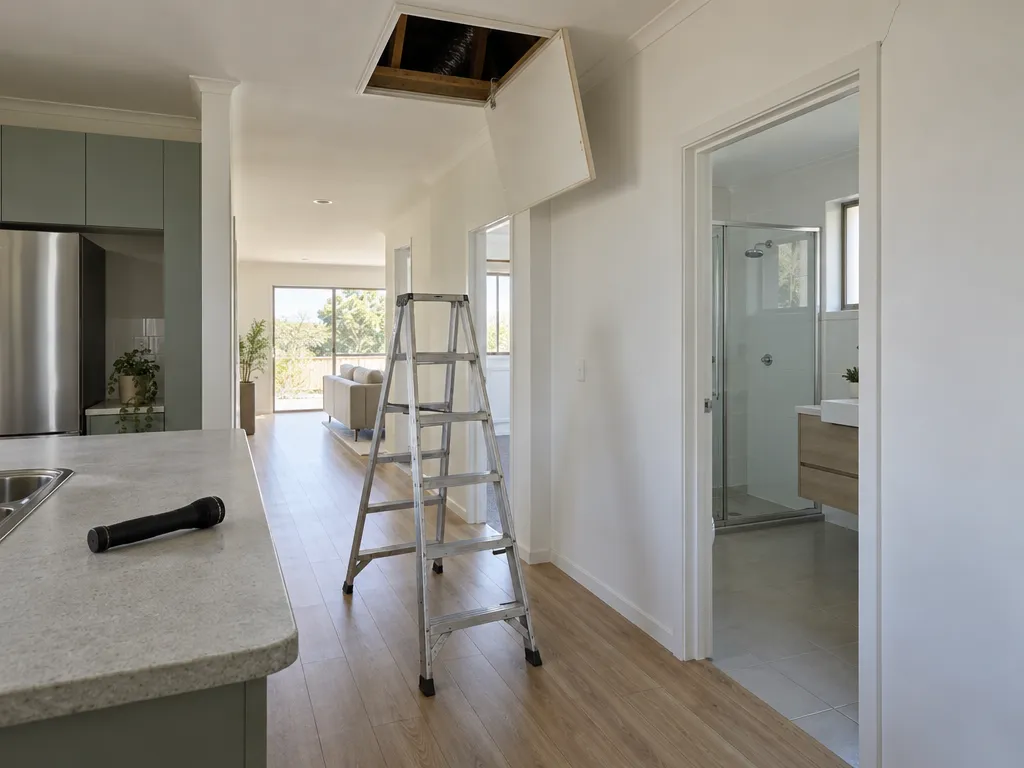
The building inspection is a physical inspection of the property that tells you about its condition. You can ask for a pest inspection at the same time. You book it through the agent or seller, and if the home is occupied, the agent coordinates with the residents.
The written report identifies major problems visible at the time, such as rising damp, wall movement (cracking), safety hazards or a faulty roof. An Australian Standard applies, but it does not set the report's style or content. Reports from different inspectors can look quite different.
Fair Trading says to use a suitably qualified person (such as a licensed builder, surveyor or architect) with adequate insurance, particularly professional indemnity. For the wider picture of how pre-purchase inspections work around here, see our guide to property inspections in Blacktown.
Where the building inspection stops: common property
This is the part most unit buyers miss. In strata and company title properties, the inspector will normally only inspect and assess the condition of the interior and immediate exterior of the unit. For other common property areas, you need to request a "special-purpose" property report.
So the roof over the top floor, the basement car park, the stairwell and the external walls beyond your lot normally sit outside a standard unit inspection. That is where the strata report earns its place. Its notes on defects and planned works tell you, on paper, what the owners corporation already knows about the shared building and what it intends to fix. That fills part of the gap. It is not an inspection, so if the common property worries you, raise a special-purpose report with your inspector before you book.
What neither report tells you
Outside a standard building report, and what to do instead
- Whether termites are still activeInstead: pest inspection
- Loose-fill asbestosInstead: test by a licensed asbestos assessor
- Repair-cost estimatesInstead: special-purpose property report
- Minor defectsInstead: not generally included
- Parts that could not be inspectedInstead: the report should list them and, if necessary, recommend further investigation
- Matters outside the consultant's expertiseInstead: the right specialist
- Future problemsInstead: a report is not a compliance certificate, warranty or insurance policy
Two reports still leave holes, and it pays to know where they are.
A building inspection report is not a pest inspection: it should flag visible termite damage, but it won't include whether termites and other pests that destroy timber are still around. Fair Trading says to get a pest inspection too, especially where termites are a known problem. If you have seen winged insects around a property this spring, our piece on what a termite swarm does and doesn't mean explains why it is a prompt to book.
The building report will not generally include parts that could not be inspected, matters outside the consultant's expertise, repair-cost estimates, minor defects or termite detection. It should list any area or item not inspected and, if necessary, recommend further investigation. Read that section first, not last.
Loose-fill asbestos is another blind spot. It cannot be identified by sight alone, and only a licensed asbestos assessor's test can confirm it.
A report is also not a compliance certificate or a warranty or insurance policy against future problems.
Buying a duplex: less strata paperwork, more weight on the inspection
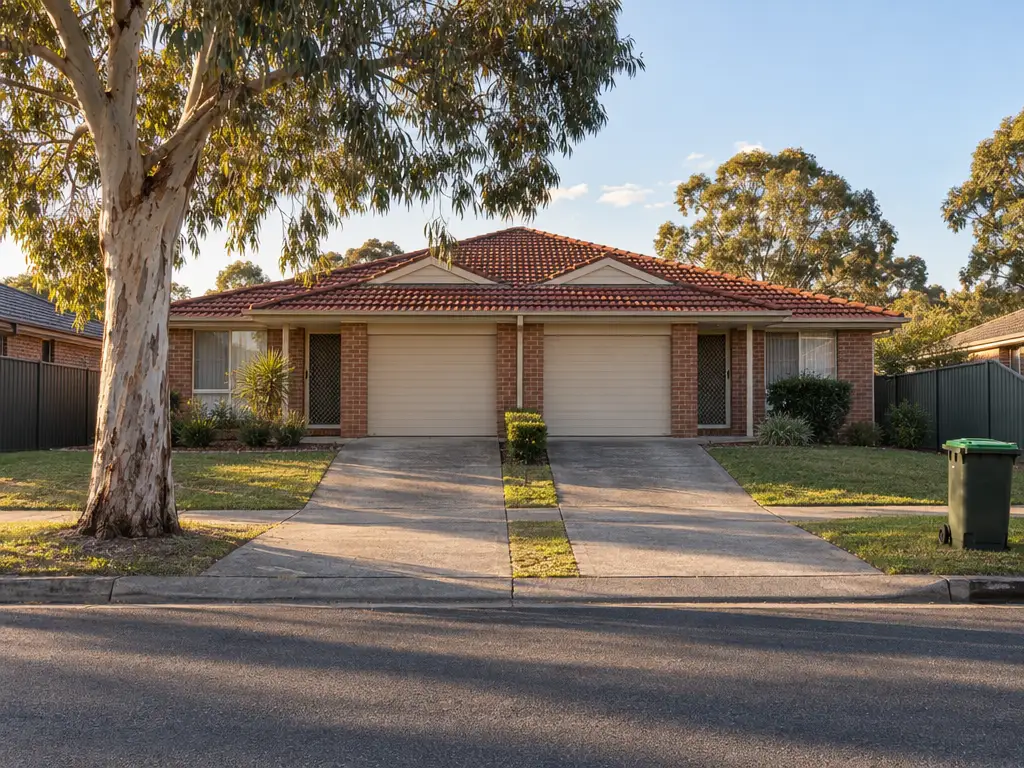
Many duplexes are strata schemes with just two lots. As National Tribune reported, two-lot schemes such as duplexes make up more than 30 per cent of strata schemes. Their paper trail is getting thinner.
From 1 October 2026, two-lot schemes no longer lodge annual reporting. NSW's fourth strata bill passed Parliament in October 2026, and National Tribune reported that it removes committees, meetings and annual reports for two-lot schemes.
Fewer meetings mean fewer minutes, and fewer minutes mean less for a strata search to find. Our view: for a duplex, the building itself has to do more of the talking. Get the inspection, and ask before booking exactly which parts of the property the scope covers.
Can you rely on reports the agent already has?
When you ask for the contract, the agent must disclose recorded pre-purchase reports they know of. That includes building and pest reports, section 182 strata document inspections and section 184 certificates. Ask for them early. They tell you what someone else has already looked at.
not a substitute for your own independent report
Fair Trading says an existing building report can save money, but it's best to get your own report done. A vendor report is "not a substitute for your own independent report". Treat an existing report as a head start, not the answer.
The order to do it in, and the cooling-off clock
For a unit or townhouse buyer in Blacktown or anywhere in Western Sydney, a workable order looks like this.
- 1Ask the agent for the contract and any existing reportsagent must disclose recorded pre-purchase reports they know of
- 2Ask your solicitor or conveyancer about the strata search and section 184 certificate
- 3Book the building and pest inspection: most consultants need a minimum of 2 to 3 days' notice
- 4Exchange
- 5Cooling-off: 5 business days, ends 5pm on the fifth business day. Withdrawing forfeits 0.25% of the price (checked October 2026). Does not apply to auction purchases or same-day exchange after auction.
- Ask the agent for the contract and any existing reports. The disclosure rule above means you can start from what is already known.
- Ask your solicitor or conveyancer about the strata search and the section 184 certificate. They will know what the contract already includes.
- Book the building and pest inspection early. Most consultants need a minimum of 2 to 3 days' notice.
- Watch the cooling-off clock. The NSW cooling-off period is 5 business days after exchange, ending 5pm on the fifth business day. Withdrawing forfeits 0.25% of the price (checked October 2026). It does not apply to auction purchases or same-day exchange after auction, so at auction the reports need to be in hand before you bid. Check your own dates with your solicitor or conveyancer.
Five business days less a few days' notice leaves very little room. Book before exchange if you can.
Buying off the plan or in a brand-new block? The developer paperwork is a different set of documents. Our piece on what the new strata handover paperwork tells a unit or townhouse buyer covers it, including why a certified maintenance schedule is not a physical inspection.
The checks and dates in one place
5 business days
Cooling-off: 5 business days after exchange, ending 5pm on the fifth business day; not for auction purchases or same-day exchange after auction
0.25%
Withdrawing forfeits 0.25% of the price (checked October 2026)
6 months
Section 184 certificate: unlodged by-laws made in the previous 6 months
1 April 2026
From 1 April 2026: section 184 certificates show orders, certain compliance action, and meetings held in the past year plus any upcoming
Booking your inspection with Blacktown Building Inspections
The strata report is your solicitor's or conveyancer's job, or a strata searcher's. The building and pest inspection is ours. Blacktown Building Inspections does pre-purchase building and pest inspections across Blacktown and Western Sydney, including the Seven Hills area.
Your next step is to send us the property address, whether it is a unit, townhouse or duplex, whether anyone lives there, and your exchange or auction date, using the enquiry form on this page. If the common property worries you, say so in the form so the scope can be discussed before you book.
Sources
- https://www.nsw.gov.au/housing-and-construction/strata/buying-a-strata-property
- https://www.nsw.gov.au/housing-and-construction/buying-and-selling-property/buying-property-nsw/inspecting-a-property/inspection-reports
- https://www.nsw.gov.au/housing-and-construction/strata/guide-to-strata-law-changes-for-strata-committees-and-owners
- https://www.nsw.gov.au/housing-and-construction/property-professionals/working-as-an-agent/pre-purchase-inspection-reports
- https://www.nsw.gov.au/departments-and-agencies/fair-trading/news
- https://www.nationaltribune.com.au/apartment-owners-get-better-protections-and-greater-rights-as-fourth-strata-bill-passes-parliament/