

If you are buying a unit or townhouse in a new NSW strata scheme, the developer's handover paperwork is now more standard, and in apartment blocks an independent surveyor certifies it. It is still paperwork.
Count what that surveyor actually certifies and you get two items. First, that the maintenance schedule was prepared using the standard form. Second, that the first year's levy estimates meet expected spending, “based on expenses provided by the original owner”. Neither item is the condition of the building.
That is why NSW Fair Trading's advice to buyers has not changed: get both a strata report and a building inspection report before you buy. At Blacktown Building Inspections we think of it as two separate paths. The paper path tells you the developer followed a process. The building path, a physical inspection, tells you what you are actually buying.
What changed for strata handover on 1 April 2026
Three of the changes touch a new scheme's paperwork:
- The initial maintenance schedule (IMS), required when the developer hands the building to owners, must be prepared using a standard form.
- In multi-storey schemes, the IMS and initial strata levy estimates must be reviewed and certified by independent surveyors.
- The 10-year capital works fund plan must also be prepared using a standard form.
The timing is fixed too. The original owner must give the owners corporation the IMS at least 14 days before the first AGM. In a multi-storey scheme, the original owner (usually the developer or builder) must also give evidence of that certification 14 days before the first AGM.
These duties fall on the original owner at handover. They do not force older blocks to redo their paperwork overnight: owners corporations only need to move to the 10-year plan standard form when revising or replacing a plan.
What is an initial maintenance schedule?
The IMS is the developer's starting guide to looking after the shared parts of the building. Fair Trading describes it as including “maintenance and inspection information for various parts of common property”. All IMS must now use the standard form, whatever the height of the scheme.
A schedule looks forward. It sets out what should be maintained and inspected, and when. It does not record the state of the roof, the balconies or the common walls on the day you sign. Hold on to that gap, because everything below comes back to it.
When does the handover paperwork arrive?
The clock starts with sales. The developer's initial period ends when at least one third of the unit entitlements are sold. The original owner must then hold the first AGM within two months of that, with 14 days' notice to owners. The IMS, and in a multi-storey scheme the certification evidence, must reach the owners corporation at least 14 days before the first AGM.
Put those together and you get the latest the paperwork can land. Our estimate: two months, less 14 days. So the IMS should reach the owners corporation no later than about six to seven weeks after the initial period ends, if the AGM is held on the last day allowed. An earlier AGM brings that date forward.
Until that first AGM the developer is in control, with limits. While it controls the owners corporation, it cannot appoint a strata manager or building manager to continue past the first AGM, or alter common property (except under a development contract). If the original owner still holds half or more of the unit entitlement at the first AGM, their vote is reduced to one-third.
Missing the rules has a price for the developer, not for you.
| What the original owner fails to do | Penalty | Source |
|---|---|---|
| Meet the multi-storey requirements (standard-form IMS, independent certification, evidence) | Penalties apply, higher for a corporation than for an individual | Guide to strata law changes, NSW Government |
| Hold the first AGM within two months of the initial period ending, or give the documents 14 days before it | A penalty, plus a further penalty for each day | Buying a strata property, NSW Government |
If an original owner does not meet the multi-storey requirements, penalties, higher for a corporation than for an individual, may apply. Separately, failing to hold the first AGM on time or to give the documents 14 days before it carries a penalty, plus a further penalty for each day.
Does the surveyor step apply to a townhouse or only an apartment block?
It turns on the shape of the scheme, not what the listing calls it. A multi-storey scheme has three or more storeys above ground level, with lots allocated one on top of another, for example apartment blocks. The surveyor certification applies to those schemes.
Some low-rise townhouse schemes may fall outside that definition. Don't assume yours does. Ask your conveyancer or solicitor which category your scheme is in. The standard-form IMS applies either way.

Height lines come up elsewhere in NSW strata. Ten-year defect insurance, which a developer can take out instead of a building bond, is for residential strata apartment buildings over 3 storeys. That is a different test from the surveyor step, so ask about each one on its own.
What does the surveyor certify, and what does it leave out?
In a multi-storey scheme, the independent surveyor must certify two things. One: the IMS was prepared using the standard form. Two: the initial levy estimates for the administrative fund and capital works fund meet the expected expenditure for the year after the first AGM, based on expenses provided by the original owner.
The surveyor must be independent of the original owner. That means not a relative, employee, employer or business partner, and not linked through a related corporation. They must also be either an Australian Institute of Quantity Surveyors member with the Certified Quantity Surveyor designation, or a Royal Institution of Chartered Surveyors member and a Chartered Quantity Surveyor. The evidence can be “a written statement or other document to the owners corporation explaining how these requirements have been met”, and it must show both the surveyor's independence and that both items were certified.
Surveyor certification is not an inspection of the building: it covers the standard form and whether the levy estimates match the expenses the developer supplied, as the guide to the changes sets out. Neither item is the building's physical condition.
| Certified by the independent surveyor (multi-storey schemes) | Not part of the certification |
|---|---|
|
|
| A building inspection is a separate step. | |
Notice where the levy check starts. It is measured against expenses the developer supplied, so it can only be as complete as that list.
Strata report vs building inspection
Fair Trading's advice is to get both a strata report and a building inspection report before buying. They answer different questions.
A strata search report covers scheme finances, insurance and when it was last checked, building defects and planned works, safety requirements, legal matters, and meeting notes. A building inspection is “a physical inspection of the property”, and a pest inspection can be requested too.
| Strata search report | Building inspection report |
|---|---|
|
|
You may be offered a report someone else commissioned. Fair Trading says existing reports can be requested through the agent, but “it's best to get your own report done”.
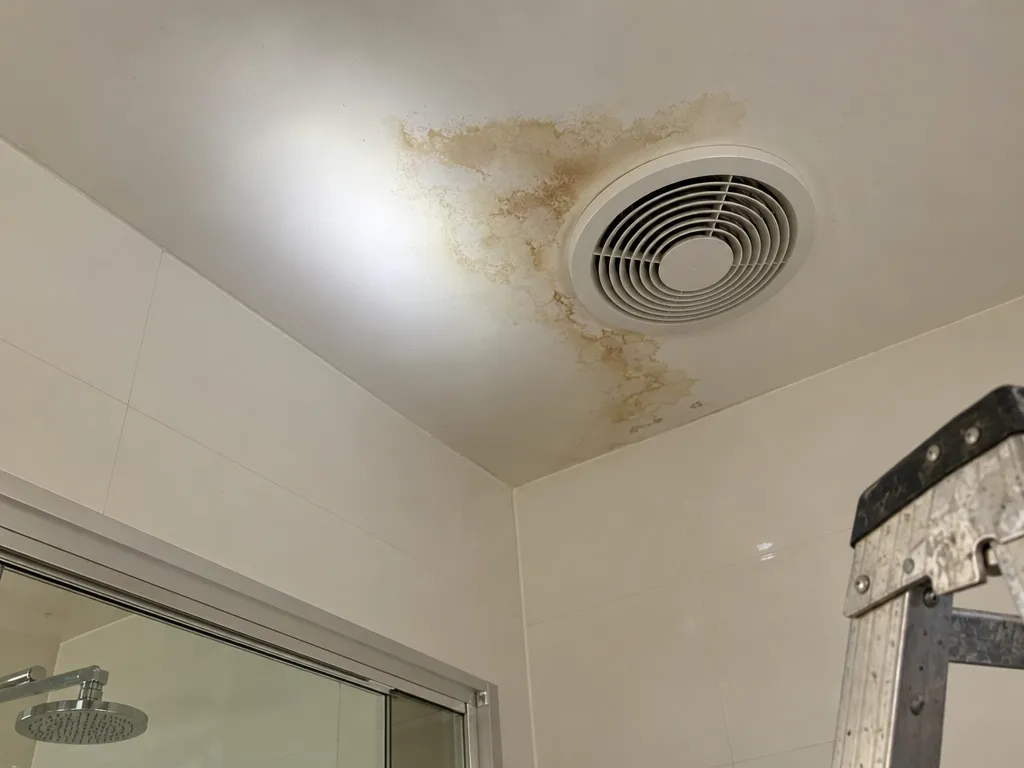
That second half is the work Blacktown Building Inspections does: pre-purchase building and pest inspections across Blacktown and Western Sydney. We don't certify maintenance schedules or levy estimates. That is a quantity surveyor's job. Our guide to property inspections in Blacktown has more on the inspection side.
How do you check the IMS when you are buying?
The IMS and the certification evidence go to the owners corporation, not to you. A buyer usually sees them through a strata report or a search of the strata records. These are the questions to put to your conveyancer or strata searcher.
- Is the IMS on the standard form? All IMS must now use the standard form.
- If the scheme is multi-storey, is there written evidence of independent certification? It should show that the surveyor is independent and has certified both items.
- Do the levies look realistic against the 10-year capital works plan? Fair Trading warns that “low levies could mean a steep rise in future fees”. The capital works fund pays for major work such as roofing and lifts.
- What does the section 184 certificate show? It sets out levies payable, outstanding levies on the lot, and funding proposals under the 10-year capital works plan. If an outstanding levy is not shown on the certificate, the purchaser is not responsible for it. Certificates must now also include embedded network utilities, orders and certain compliance action against the owners corporation, and meetings held in the past year and any upcoming meetings.
| Question | Where the answer usually sits | Who to ask |
|---|---|---|
| Is the IMS on the standard form? | Strata records | Conveyancer or strata searcher |
| Multi-storey only: is there written evidence that an independent surveyor certified the IMS and levy estimates? | Strata records | Conveyancer or strata searcher |
| Do levies look realistic against the 10-year capital works plan? | Section 184 certificate and the plan | Conveyancer |
| Are there outstanding levies, compliance orders or embedded networks? | Section 184 certificate | Conveyancer or solicitor |
None of this is legal advice. Your solicitor or conveyancer, and NSW Fair Trading, are the people to confirm what applies to your purchase.
Does buying new or resale change what you ask?
Buying into a freshly registered scheme, the handover documents are recent. Ask whether the first AGM has been held yet, and whether the IMS and, for a multi-storey block, the certification evidence have been delivered to the owners corporation.
Buying a resale unit or townhouse, the scheme may have been handed over before the new rules started. Ask your conveyancer which requirements applied at its handover rather than assuming either way. An older-format 10-year plan is not a red flag by itself, because owners corporations only need to move to the standard form when revising or replacing a plan.
In both cases the building has kept ageing since the paperwork was written. The schedule hasn't seen that. An inspector can.
Documents to ask for before you buy
The handover rules at a glance
Six rules carry the whole handover: the one-third sales trigger and two-month AGM window, the 14-day delivery deadline, the three-storey test and the multi-storey penalties, and the daily penalty for a late AGM or late documents. Not one of them involves anyone looking at the building.
Your next step: get the building itself inspected
Let your conveyancer or strata searcher work through the strata report, the section 184 certificate, the 10-year plan and the IMS. Then cover the half the paperwork can't: ask Blacktown Building Inspections for a pre-purchase building and pest inspection of the unit or townhouse you are buying, using our enquiry form.
Sources
- https://www.nsw.gov.au/departments-and-agencies/fair-trading/news/changes-to-strata-laws
- https://www.nsw.gov.au/housing-and-construction/strata/guide-to-strata-law-changes-for-strata-committees-and-owners
- https://www.nsw.gov.au/housing-and-construction/strata/buying-a-strata-property
- https://www.nsw.gov.au/departments-and-agencies/building-commission/industry-changes/ten-year-defect-insurance-for-apartment-buildings